

An Overview of Odour Testing

The business of odour testing might seem unusual. After all, not everyone gets paid to smell things for a living! At Silsoe Odours, our UKAS-accredited laboratory is home to a dedicated team of odour panel members. They are often referred to as “sniffers.” These specialists are carefully selected for their sensitivity to odours. Their work ensures that our results are reliable, objective and representative of the wider population.
This article tells you everything you need to know about odour testing. From how we choose panel members, to the methods we use to measure odour.
Odour Panels: A Representative Sample of the Population
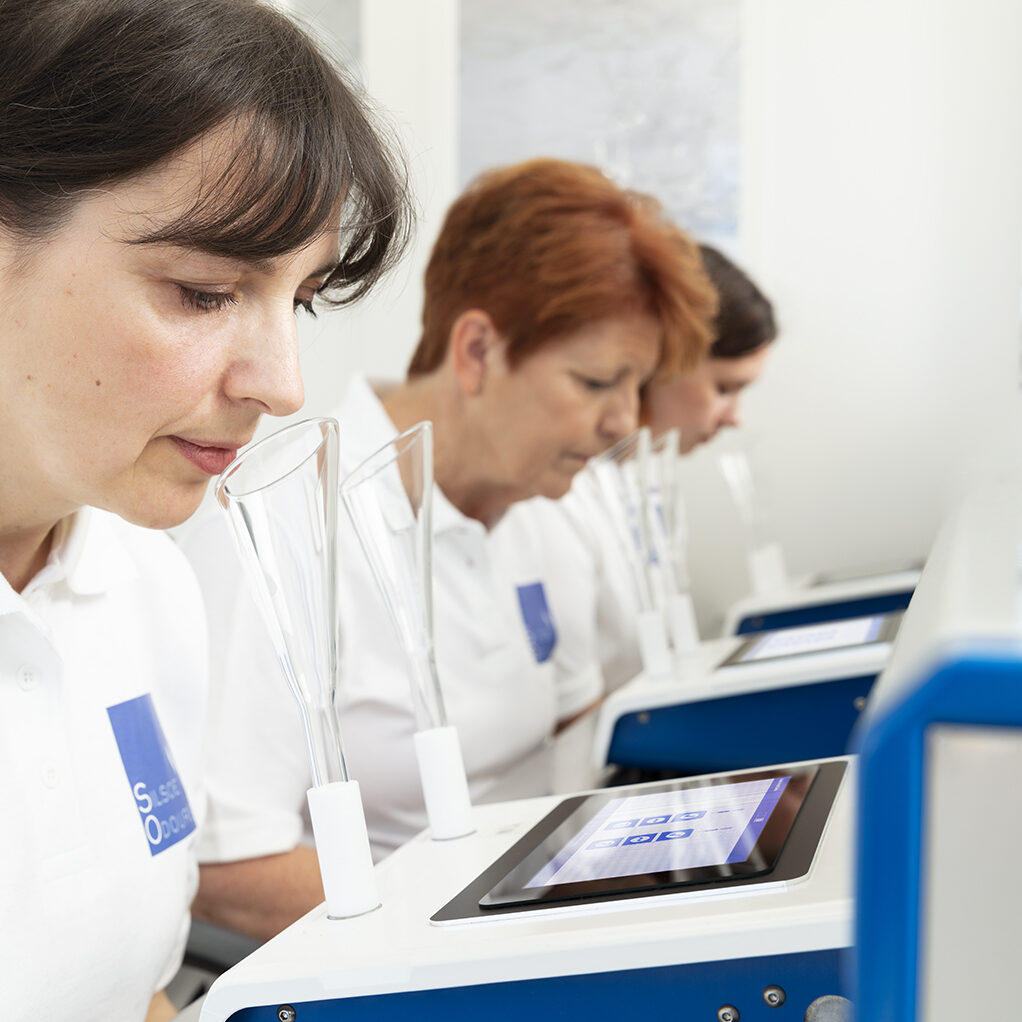
Not everyone has the same sense of smell. Some people can detect a doughnut from across the room. Others are oblivious to strong perfumes. The goal is average. Our odour panels are designed to reflect the typical population’s sensitivity to odours.
To achieve this, all panel members go through a strict selection process and ongoing testing. We only accept those whose sense of smell falls within a defined sensitivity range. This ensures our odour testing results are consistent, objective, and defensible. As a result, you can confidently use our data for environmental monitoring, regulatory compliance, and planning applications.
The Role of the Sniffer
Primarily, our odour panel members analyse samples collected from sites during an odour sampling survey. Our sampling team is UKAS-accredited and collects the majority of samples we receive.
Once in the lab, sniffers analyse samples for several key parameters. The most popular is odour concentration testing, but we also test samples for other features and characteristics. For example, we can analyse samples to characterise odour (what it smells like), intensity (how strong it is), and hedonic tone (pleasantness).
Our panels typically work in teams of six to maximise objectivity. Only 1 in 3 applicants passes the selection process, ensuring highly reliable, consistent testers.
Some clients prefer to use our ‘lab-only’ odour testing service and send their samples directly to us.
Learn more about our odour testing and analysis services and how they can help your site.
Objective Odour Testing: How it Works

We use a specialist laboratory instrument called an olfactometer to conduct odour testing. Here’s the process in simple steps:
- The olfactometer presents each panel member with two samples, via ‘horns’. One contains a dilution of the odour, and the other clean air.
- Panel members identify which sample contains the odour. They indicate if their answer is a guess, an inkling, or certain.
- We repeat the process with increasing odour concentrations, until all six panel members are certain of the odour in two successive rounds.
- Each sniffer’s results are combined to calculate the geometric mean. This gives the odour concentration in the sample.
This structured approach ensures that results are repeatable, objective, and in line with the BS EN 13725:2022 odour measurement standard.
For a broader comparison of approaches, see our guide to odour assessment methods.
Common Odours We Test
Our panel encounters odours from a wide variety of sources. The most frequent? Sewage works, followed by anything from farms to restaurants. Despite this, the lab environment is entirely odour-free. This allows sniffers to detect odours accurately without interference.
Maintaining a Trustworthy Nose

Repeatability is critical in odour testing. Sniffers must maintain a consistent sense of smell, which requires strict lab protocols. For example:
- No perfumes, aftershaves, or scented products
- Avoid strong foods before testing
- Use odour-free hand sanitiser and fabrics
We even carefully manage the lab’s air quality to prevent background odours from affecting results. These measures ensure that our panel members’ noses remain highly reliable over time.
Try Odour Sensitivity Testing Yourself
Curious about your own sense of smell? Our odour sensitivity testing service lets you compare your detection abilities with the population average, or a specific complainant. It’s perfect for:
- Site monitoring or environmental planning
- Understanding odour complaints and how to handle them
- Exploring your own odour sensitivity for interest or learning
All testing uses n-Butanol as a reference gas and is in line with BS EN 13725:2022.
References & Further Reading
- Institute of Air Quality Management (IAQM)
Guidance on the assessment of odour for planning
- Environment Agency
Odour management: comply with your environmental permit
Published March 2018. Last updated April 2026.

2 Responses
[…] samples are in safe hands. They’re tested by our fully trained (and frequently tested) panel of odour assessors, to the European Standard EN13725. There are a number of different things we can test for, […]
Seeing how the testing process is done is really quite interesting. Now it does make sense that you’d want something like this done at a place where you don’t want a certain smell to present. As you said, doing this would be a good way to figure out where the smell is coming from and what is causing it.