

Odour Characterisation: Building Consistency in Odour Description

Understanding an odour is not just about detecting its presence. It is about describing it in a way that is consistent, repeatable and useful for interpretation.
In practice, this is more difficult than it sounds. Two people can experience the same odour and describe it in completely different ways. One might describe it as “sulphurous”, another as “eggy”, while another may link it to a specific source or process.
Odour characterisation training is designed to reduce this variability. It ensures that, when we describe odours, we do so using a structured, consistent approach that supports both laboratory analysis and field observations.
What is Odour Characterisation?
Odour characterisation provides a description of an odour at, or just above, the detection threshold.
It focuses on what the odour smells like, rather than how strong it is. This is an important distinction, particularly in structured odour assessment and interpretation work.
Where odour concentration is measured through methods such as olfactometry, characterisation provides a supporting sensory context.
Why Consistency in Odour Description Matters
Odour is inherently subjective. Without structure, descriptions can vary significantly between individuals, even when assessing the same sample or environment.
A lack of consistent odour descriptions can pose challenges for several reasons. It makes it difficult to compare results over time, interpret whether odour conditions have changed, and assess whether mitigation measures are working properly. This inconsistency limits confidence in data. It can affect both regulatory interpretation and odour complaint investigations.
Odour characterisation training helps remove this uncertainty by standardising the language used to describe odours. This strengthens the reliability of all odour assessment work.
It helps ensure that:
- Field observations are comparable over time
- Laboratory outputs are interpreted consistently
- Complaints are validated using structured language
- Mitigation performance is assessed more clearly
Consistent odour characterisation improves confidence in both qualitative and quantitative odour data.
Where Odour Characterisation is Used
Odour characterisation is used in both controlled laboratory environments and within field assessments.
During laboratory odour testing, it helps odour panel members describe what they are detecting at low concentrations.
In the field, it supports structured observations in sniff surveys. This is particularly helpful when there are multiple potential odour sources.
Rather than replacing measurement, characterisation adds interpretive value to it.
How Odour Characterisation Training Works
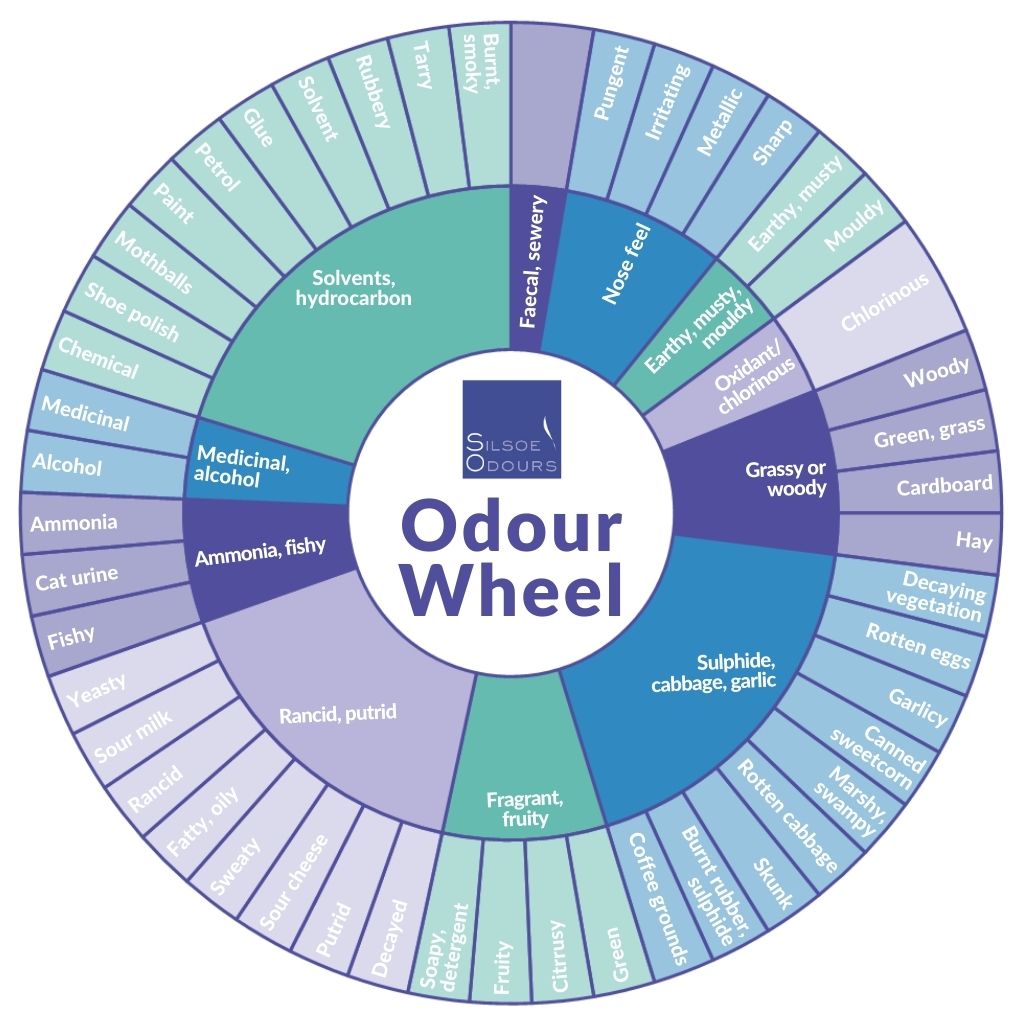
Training focuses on developing a shared sensory framework across the odour panel, rather than relying on personal interpretation alone. Sniffers receive structured reference materials and controlled odour exposure.
This includes:
- Odour classification tools, such as odour wheels.
- Calibration exercises to align descriptive language across the panel.
- Exposure to specific odorants at controlled concentrations.
- Repeated assessment, which helps maintain consistency over time.
Continuous Training & Quality Assurance
Odour characterisation is not a one-off exercise. It forms part of ongoing training and quality assurance within odour panel work.
Regular calibration ensures consistent descriptions over time, even as personnel and project requirements evolve.
Supporting Reliable Odour Insights
Accurate odour assessment depends on both measurement and interpretation. Characterisation sits in the space between the two. It provides the language needed to describe what is being measured.
At Silsoe Odours, structured training ensures our odour panels deliver consistent, defensible results in both laboratory and field environments.
This is a key part of delivering reliable odour testing and interpretation services.
Speak to our team to understand how this can support your odour challenge.
Call: 01525 860222
Follow: LinkedIn | X (Twitter) | Facebook
Published June 2023. Last updated May 2026.
