
Is Objective Odour Measurement Possible?

Odours are inherently subjective. Everyone experiences smells differently, which makes them challenging to measure accurately. This is why standardised methods are essential, as explained in our guide to measuring odour. While artificial “electronic noses” exist, the human nose remains the most reliable tool for odour assessment. The key is using it systematically, with trained assessors and standardised methods, to achieve objective odour measurement.
In this blog, we explore how odour professionals achieve fair, accurate, and objective results.
Objective odour measurement supports several key scenarios:
| Application | Related Guide |
|---|---|
| Planning Applications | ↗ Odour Impact in Planning & Development |
| Environmental Permitting | ↗ Odour Management in the UK: A Guide to Compliance & Permits |
| Investigating Odour Complaints | ↗ Odour Complaints & How to Handle Them |
The Human Nose is Critical for Objective Odour Measurement
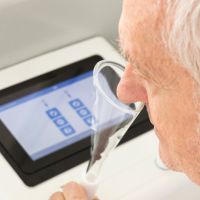
Odour is a human sensation. This means that mechanical devices alone cannot fully replicate our perceptions. Trained assessors provide a level of accuracy that technology cannot match.
Our sense of smell is generally reliable thanks to evolutionary adaptation. Early humans relied on it to identify food, detect danger, and interpret social cues.
However, perception varies between individuals. What seems strong to one person may be barely noticeable to another. The challenge is to find a standard method to measure odour. In doing so, we can limit these variations and achieve consistent results.
Using Sniff Surveys for Reliable Odour Assessment
Sniff surveys provide qualitative insight into odour presence and strength. They can be particularly helpful when direct access to a site is difficult. During a survey, assessors record odours at set intervals across multiple locations.
While inherently subjective, sniff surveys are credible when:
- Conducted systematically
- Performed by assessors who meet BS EN 13725:2022 requirements
- Documented consistently
Sniff survey results can support planning applications or environmental investigations. However, because they are qualitative, sniff surveys are typically combined with other services when quantitative data is needed. They are used alongside odour sampling and laboratory odour testing to provide a more complete understanding of odour impact.
Odour Sampling & Dynamic Olfactometry
For objective, quantitative measurement, odour sampling and laboratory analysis are essential.
First, odour samples are collected at the source. They are then analysed in our UKAS-accredited laboratory using dynamic olfactometry.
At Silsoe Odours, we carry out a range of odour testing services. For example, our most popular tests include odour concentration, intensity and characterisation. We can also analyse samples for odour detection thresholds and chemical composition.
For a deeper understanding of measurement methods, see our guide on measuring odour.
Ensuring Accuracy with BS EN 13725:2022 & UKAS Accreditation

European odour standard BS EN 13725:2022 sets the standard for odour assessment. It outlines how to train and test odour assessors to ensure reliable results. Our assessors undergo regular and rigorous testing in accordance with this standard.
UKAS accreditation confirms compliance and provides confidence in the objectivity of measurements. Silsoe Odours holds accreditation for both odour sampling and analysis. This demonstrates our technical competence, traceability and consistency.
If you use your odour assessors to monitor odours, you must also make sure they comply with BS EN 13725:2022. Assessors should complete an odour sensitivity test to confirm this.
How to Achieve Objective Odour Measurement
Objective odour measurement relies on:
- Skilled human assessors with verified sensitivity
- Systematic odour surveys as needed
- UKAS-accredited laboratory analysis using dynamic olfactometry
- Compliance with BS EN 13725:2022
By combining these elements, operators can obtain accurate, defensible odour data. This is helpful for planning, compliance and dispute resolution.
If you are deciding which method is most appropriate for your site, see our guide to odour assessments and their applications. It compares odour sampling, sniff surveys and modelling in more detail.
Find Out More
The human nose remains the cornerstone of objective odour measurement. But it is possible to achieve objectivity through training, standards and accredited testing.
If you need defensible, UKAS-accredited odour data for planning, permitting or investigation purposes, we can help. Please call 01525 860222, email info@silsoeodours.co.uk, or click the button below.
Frequently Asked Questions
What Is Objective Odour Measurement?
It is the process of assessing odour using standardised methods, trained assessors, and accredited laboratory analysis. Odour perception is subjective. But we can ensure consistent, repeatable and defensible results by complying with BS EN 13725:2022.
Can Odour Really Be Measured Objectively?
Yes. Although individuals perceive odours differently, objective odour measurement is possible by using:
- Screened odour panellists with verified sensitivity
- Controlled testing environments
- Dynamic olfactometry conducted in a UKAS-accredited laboratory
What is BS EN 13725:2022?
BS EN 13725:2022 is the European standard for measuring odour concentration by dynamic olfactometry. It sets requirements for:
- Odour panellist selection
- Testing procedures and equipment
- Quality control to ensure reliable results
Why is UKAS Accreditation Important in Odour Measurement?
UKAS accreditation confirms that a laboratory operates in line with recognised standards. For example, BS EN 13725:2022. It gives confidence that results are accurate, traceable, and suitable for planning, permitting, or legal proceedings.
Last updated 22nd April 2026.
